NAHT SEND Conference 2022

NAHT SEND Conference Rhino UK

We’re gearing up for the 2022 NAHT SEND Conference – will you be there?

Sarah and Carlyn, from our sensory team, will be heading to the annual headteacher’s special needs conference to talk about all things sensory! Whether you’re looking to start a big sensory project or beginning to think about how sensory could be used in your school – they’ll be able to offer their expert help, inspiration, and advice.

If you’re worried about not getting the chance to visit our stand, book a meeting with our team!

Sensory in Schools

Our sensory team has over 15 years of experience helping to make schools inclusive for students of all ages and abilities, supporting their wellbeing, and nurturing their development.

  • Creating calming sensory rooms where students can rest and reset between classes.
  • Designing sensory gardens that stimulate and connect senses to nature.
  • Building sensory integration rooms that actively develop students’ minds and bodies.
  • Providing portable sensory resources, like our sensory voyager trollies, that can be wheeled from room to room and shared between classes, distracting and calming users while they expand their minds.
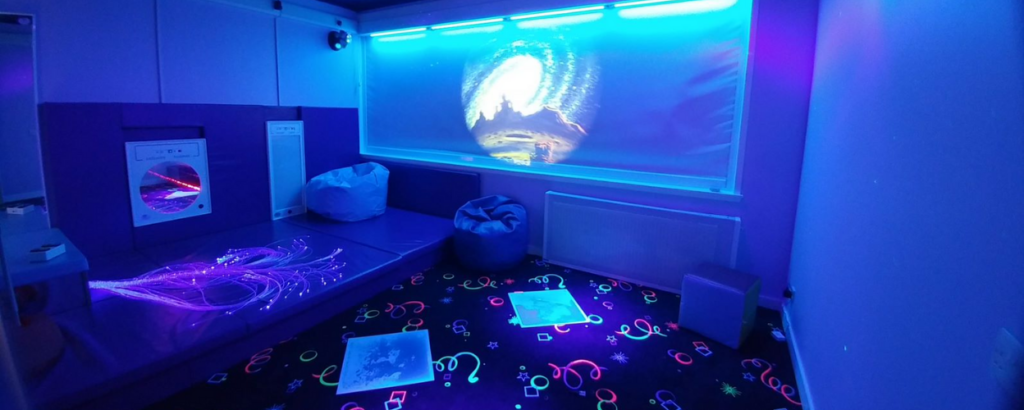
  • Transforming underutilised rooms into immersive reality spaces that can be used for learning, socialising, and play.

If you haven’t already bought a ticket for the event, you can do so here.

We look forward to seeing you there,

Team Rhino!

Key Information

  • Date/Time: 8:30 am to 3:30 pm on Wednesday 19th of October
  • Location: The Studio, The Hive, 51 Lever Street, Manchester M1 1FN
  • Book a meeting with our Sensory Team
  • More information about the event

Design in Mental Health Conference 2022

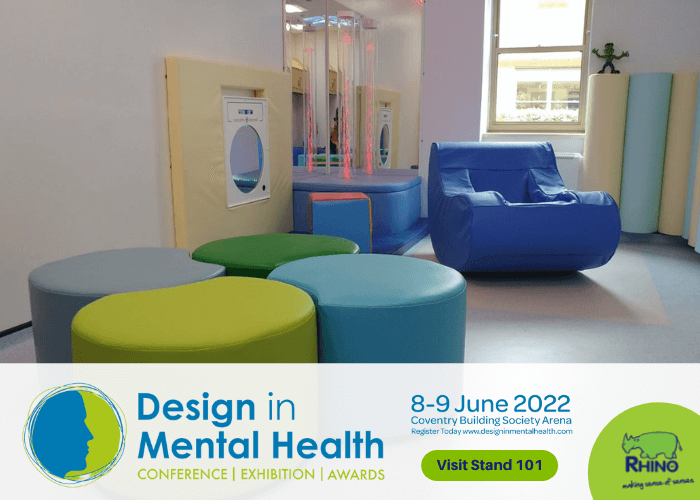
In June, we’re going to be heading out on the road to attend the annual Design in Mental Health Conference in Coventry. It’ll be our first in-person event for 2022, and we’re really excited to see you in person to share the wellbeing-boosting, developmental and therapeutic benefits of sensory resources.

Scroll down to find out more about the conference, what it’s about, and where you’ll be able to find us.

Design in Mental Health Royal Devon Hospital

What is the event all about?

This year’s Design in Mental Health conference is centred around ‘creating environments designed to heal’ – offering the opportunity for industry experts, teams and designers to come together to explore ideas, discuss challenges and create positive change.

Where is the event taking place?

Design in Mental Health 2022 is taking place at the Coventry Building Society Arena. You’ll be able to find us at stand 101!

When is the Design in Mental Health Conference?

The conference is running on Wednesday 8th and Thursday 9th of June 2022. Doors open at 9 am, and if you arrive before 10 am, you’ll get free parking and a free breakfast!

Who will be there?

Keren and Linten from our design and sales teams will be there to say hello, talk about sensory rooms and resources, and answer any questions you may have.

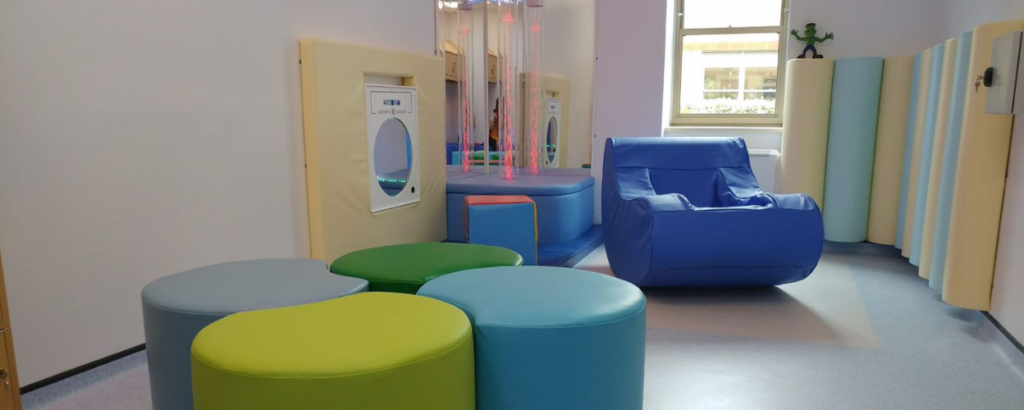
They’ll be bringing along a portable interactive omiVista projector system, samples of our bespoke safety padding, an infinity tunnel and a mesmerising bubble wall – so that you can experience the therapeutic and wellbeing boosting benefits of sensory in person.


More Information

Design in Mental Health Sensory Room

Mental Health Awareness Week 2021

Welcome to Mental Health Awareness Week 2021!

After being stuck inside for over a year, the Mental Health Foundation has decided to spend Mental Health Awareness Week 2021 outside and in nature, something our sensory experts are particularly excited about.

We’ve written before about the deep-rooted connection between nature and sensory. We’ve also written about the mood-boosting properties of our senses; when you put the two together, you get quite a practical potion for supporting your senses and your wellbeing.

To get you thinking about nature, your senses and your mood, our sensory team have put together a handy ‘Five Senses Focus’ activity sheet for you to get stuck into (which you can download right here). Tick the boxes as you explore your senses and fill in the blanks with your own sensory inspiration – why don’t you let us know which sense you enjoyed exploring the most by sharing your checklist with us on social media?

We hope that you have an honestly optimistic week talking about, sharing and supporting your mental health.

Warm Regards,

Team Rhino.

Mental Health Awareness Week 2021

Mood-Boosting Sensory Resources

  • Colour Changing Aroma Diffuser: Part diffuser, part mood lamp, part speaker – create an instantly relaxing multisensory environment filled with soft light, music and smells with our Colour Changing Aroma Diffuser.
  • Precious Petzz Cat: Adopt a lifelike friend who is soft and cuddly and great for calming, comforting, and reassuring.
  • Cuddle Ball: Instead of wrapping your mind up in your problems, why don’t you wrap your arms in and around this comforting and cosy Cuddle Ball? Feel your stress and anxiety disappear, and find yourself falling into warm relaxation.
  • Emotion DominoesThis simple game allows children and adults verbalise how they’re feeling, as well as comparing how their feelings differ from those of their friends, encouraging discussion about emotions without judgement.
  • MohDoh Sleep Pack: Tactile, sweet-smelling and great for relaxing moments of sensory thought.

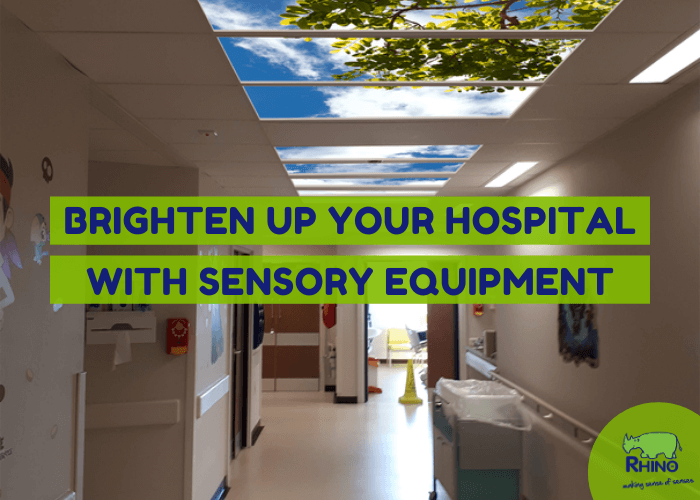
Brighten up your Hospital with Sensory Equipment


Hospitals can feel bleak, clinical, and slightly overwhelming for any young patient who finds themselves in A&E or living on a ward. Luckily, you can do lots of things to make your Hospital experience warmer, friendlier, and most importantly, less scary with the introduction of sensory elements.

Sensory elements and resources can make a distinctively positive impact on your patients, staff and visitors, making your Hospital a more pleasurable place to be.

When we talk about sensory equipment, some people believe that you need a complete shining, bubbling, out of this world Multi-Sensory Room, but that’s not necessarily true. You can create a sensory environment in the corner of a room, in a waiting room, across the walls in a long corridor, or anywhere you’d like with budget-friendly portable sensory equipment, which can be used across multiple rooms and hospital departments.

Rhino Sensory UK work with hospitals across the UK to create these special sensory environments, transforming and uplifting patient experiences. Carry on reading this blog to find inspiration for your own hospital-based sensory project!

Explore Sensory Equipment


Continue reading “Brighten up your Hospital with Sensory Equipment”

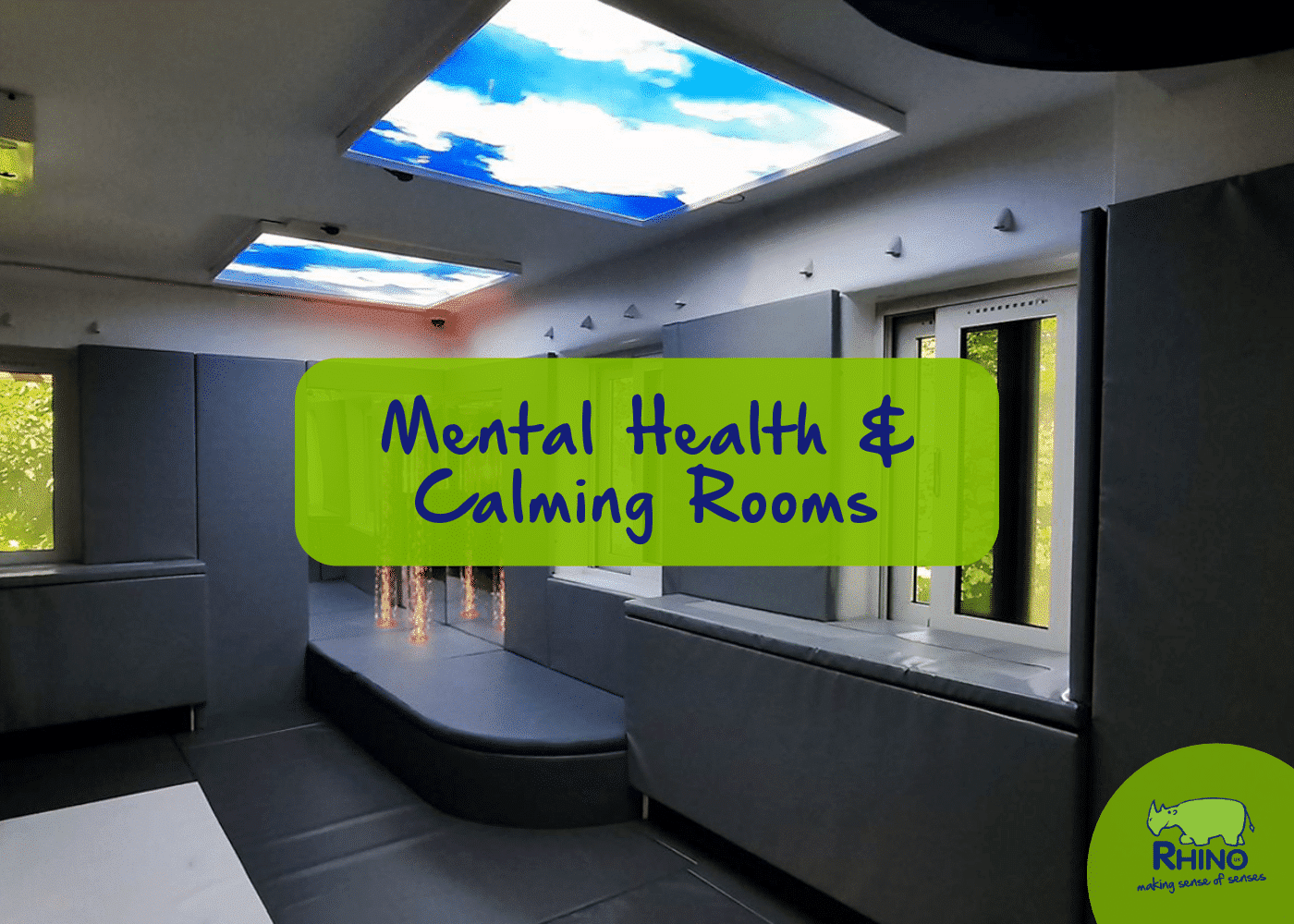
Mental Health And Calming Rooms


There is so much more to the world of ‘Sensory’ than people may originally think. A ‘Sensory Room’ is an umbrella term used to categorise a variety of sensory spaces designed to positively impact special needs and disabilities.

Recently, it has become increasingly apparent how beneficial sensory rooms can be for people with mental health issues. Schools, care units, prisons and mental health centres have started to incorporate sensory designs into their environments.

Calming Rooms are the most popular sensory room in Mental Health Environments.


What Is A Calming Room?

The main purpose of a Sensory Room is to create an environment where everyday distractions are removed, and relaxation and concentration are encouraged. Unlike a Sensory Room, a Calming Room’s main objective is not to stimulate but to provide a gentle road to mental escape in a safe and secure environment.

Creating an environment where self-regulation is encouraged and rewarded.


When To Use A Calming Room

There are two important things to remember when it comes to the Calming Room. First, only use a sensory room before or after a crisis, NEVER during! Second, each room is designed for personal, one-on-one staff-to-client engagement—not room for big social groups.


The Benefits Of A Calming Room

  • Creates a safe space
  • Facilitates a therapeutic alliance
  • Increases the ability to self-nurture
  • Increases resilience
  • Increases self-esteem and body image
  • Increases the ability to engage in meaningful life roles
  • Increases the ability to engage in social activities
  • Increases ability to cope with triggers


Ways to use a Calming Room

  • Proactively to prevent a crisis situation
  • Responsively after a crisis to de-escalate and problem-solve
  • For Self Regulation


Seclusion Methods vs Multi-Sensory Therapies

Over the years, there have been many debates and different opinions surrounding seclusion methods and multi-sensory therapies. Here are a few points to consider:

Seclusion Isolates:

  • The patient spends less time in education (classroom/social environment)
  • They are often left triggered, and very little is learned
  • The message is, “I am alone, and I have to deal with this situation all by myself.”
  • Creates more frustration, anger, irrational thoughts and behaviour

Multi-Sensory Engages:

  • Sensory calming rooms engage both the staff and the user physically and cognitively.
  • It teaches positive social skills over time.
  • The message is, “this person wants to help me at my worst time, I have a choice on how to deal with this moving forward, and I will try and take control of my own emotions.”
  • Improves engagement in education in and out of the sensory room


How Can You Recognise Early Warning Signs Of A Meltdown?

  • Do you know your clients’ low-level cues?
  • How do you normally respond to them?
  • Do you think your response affects escalation?

Start making mental notes of early warning signs to better prepare yourself for when to intervene to prevent further escalation.


Calming Room Resources

It is important that your Calming Room incorporates a mixture of the following resources to suit a number of user needs and to stimulate mentally and physically:

Click on the links to view the products in more detail.

  • Pea Pod, a deep-pressure inflatable pea pod, creates a secure, calming and relaxing experience for a user.
  • Body Sox users can voluntarily climb inside this suit, which gently resists their movements, encouraging the exploration of movement.
  • Body Roller provides deep pressure therapy as the user crawls between the rollers, squeezing out tension.
  • Protac Sensit Chair, inside the chair are weighted balls that send impulses to the central nervous system, soothing muscles and minds.

Mental Health covers a wide spectrum and there are so many different therapies and sensory solutions available to help. It can be difficult to decide which sensory support would be best for your service users. This is where we can help! With over 40 years of experience creating a wide variety of sensory environments our sensory team have the skills and knowledge to help. Get in touch for more information!

Speak to an expert

Bubble Column vs Hurricane Column


Are you considering buying a sensory column but not 100% sure whether to go for the bubble or the waterless hurricane tube? We can help you decide!

Bubble and Hurricane Columns are centrepieces of every multi-sensory environment. Using a sensory tube will immediately draw eyes and capture the attention of distracted minds.

Therapeutic benefits of Sensory Columns:

  • Calming: The tubes are very calming. Their lights and soft humming sounds encourage relaxation and ease anxiety. They’re perfect for de-escalation spaces and helping users feel more settled in their environment.
  • Stimulating: The column’s changing colours and racing bubbles create a wonderfully stimulating visual effect that distracts and captures attention.
  • Development: Interaction and movement are key elements of the tube’s experience, helping to develop tactile, visual and social skills.

Bubble Column vs Hurricane Column

Explained In More Detail

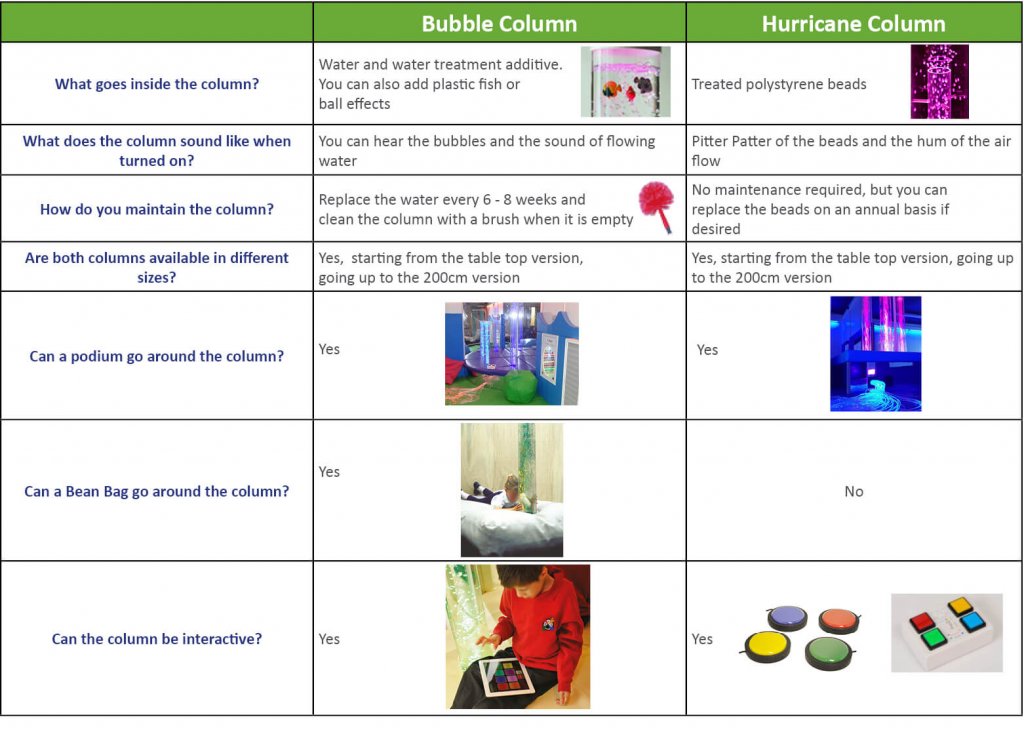
1 . What goes inside the columns?

  • Bubble Column: The Bubble Column is filled with water and water treatment additives. You can add Floating Fish and Ball Effects, which float in the water for additional visual stimulation.
  • Hurricane Column: The Hurricane Column is filled with specially treated polystyrene beads circulated by an air fan.

2. What do the columns sound like?

  • Bubble Column: You can hear the bubbles and sound of flowing water; it’s very relaxing and may remind some of being on holiday or sitting in a warm, bubbling bath or hot tub.
  • Hurricane Column: The sound of the pitter-patter as the beads hit the top cap and the calming hum of the airflow. This sounds like rain tapping on a window and gives a relaxing and comforting sound.

3. How do you maintain the columns?

  • Bubble Column: The water inside the Bubble Column should be replaced every 6 – 8 weeks. If the room temperature is hot, the column may need to be emptied more frequently. When the column is empty, the tube may also need to be scrubbed to clean off any scum deposits. See our full cleaning instructions here: https://www.rhinouk.com/how-do-i-clean-my-sensory-bubble-column/.
  • Hurricane Columns: No maintenance, but the beads can be replaced annually for infection control.

4. Are both columns available in different sizes?

  • Yes, both are available in a variety of sizes, starting with the tabletop columns. However, Tabletop Tubes are smaller, portable and practical for busy spaces. When you’re not using it, you can move it around with ease and pack it away in a carry bag.
  • Sizes then start from 120cm tall to 200cm tall.
  • The size you decide on depends on the space you have available, and our team is more than happy to advise.

5. Can you put a podium or bean bag around both kinds of columns?

  • Yes, both columns can be fitted into a podium. A podium creates a comfortable padded seat around a sensory column where you can get up close and experience it fully. The column’s base is safely contained behind wooden panels covered in mirrors, creating a lovely visual effect.
  • Beanbags can be placed around a Bubble Column, but they cannot be put around a Hurricane Column as they can block the fan’s airflow. So please, please don’t do this!

6. Can you use interactive controllers in bother sensory columns?

Yes, both sensory columns are available in an interactive version, whereby a variety of controllers can be used to; change the colour and stop/start the bubbles or beads.


The Hurricane Column has one feature the Bubble Column doesn’t! If you hold your hand over the top cap of the column, it will stop the airflow. When you let go, the beads will WOOSH up like a volcano! It’s a simple but effective cause-and-effect interaction.


We hope this short blog has helped you decide which column to buy, but please get in touch if we haven’t answered all of your questions or if you want to find out more.

Summer Holidays Sensory Play

Summer holidays are here, and many parents have that dreaded feeling of how are they going to keep their children entertained for the entire summer holiday – and it’s a scary thought!

This blog will give parents and carers ideas and inspiration to create their own sensory activities throughout the summer holidays.

Continue reading “Summer Holidays Sensory Play”

What is a Sensory Processing Disorder?

A Sensory Processing Disorder is a mental condition that affects how your brain receives signals from your senses.

People with sensory processing disorders may find themselves oversensitive to sights, sounds, textures, flavours, and other sensory inputs, making everyday experiences overwhelming. They might even lead to a Sensory Overload when their brain feels overstimulated by the sensory information around them.

Sensory Overloads are not too dissimilar to an anxiety attack. If you’re experiencing a sensory overload, it’s best to take yourself to a quiet, calm area, so your senses can balance out and restabilise.

Sensory processing disorders affect children and adults alike and negatively influence their social, personal, and professional lives.

Luckily, there are lots of things you can do to manage your sensory processing disorder. Carry on reading to find out.


What are the main signs of a Sensory Processing Disorder?

Are you Hypersensitive or Hyposensitive?

Hypersensitive people are likely to have an extreme response to sensory inputs that pass by neurotypical people, whether that’s noticing sounds that other people may not; reacting negatively to being touched, even by people that they know; or excessively worrying about their safety in large crowds.

Hyposensitive people lack sensitivity to their surroundings. Because of this, they can be very active, constantly on the move to seek sensory stimulation; they might feel a need to touch their surroundings, including people, which can sometimes come across as inappropriate to others. Hyposensitive people can also have issues with personal space and come across as a little clumsy and uncoordinated.

Maybe you’re both.

Some people with sensory processing issues show signs of both hypersensitivity and hyposensitivity and can behave in one or both of the following ways:

  • An extreme response to a change in environment. Someone may be comfortable in a familiar environment, but if they are taken to a new place or their routine changes, it could cause a ‘meltdown’.
  • Fleeing from stimulation. Hypersensitive people may try to escape over-stimulating environments and move towards a space that’s familiar and calming.


What skills can be affected?

People with sensory processing issues have difficulty processing sensory information, which can quickly become frustrating and confusing. It can be a struggle to adjust to new surroundings, prompting feelings of stress and anxiety; because of this, it can take longer for people with sensory processing issues to settle into new activities or situations.

Those who are under-sensitive may avoid touching and handling objects, which can consequently impact their motor skills development.

Over-sensitive people can have difficulty socialising if they feel anxious or irritable around other people. Whilst under-sensitive people may be too rough or full-on with others, making others feel uncomfortable and could, unfortunately, lead that person to be excluded from school.

Poor self-control is another issue a person may face when they feel overstimulated or anxious; they may have trouble controlling their impulses, leading to random outbursts of behaviour, like running off or throwing something.


How can I help someone with a Sensory Processing Disorder?

Helping somebody with a sensory processing disorder is no easy task. It’s not something that can be controlled, managed, or changed; it needs to be supported.

Thankfully, there are lots of ways you can support someone with a sensory processing disorder to help make them and their life easier. Here are a few ideas to try and help:

  • Research to learn about sensory processing disorders, so you can identify their signs and can recognise patterns or triggers in their behaviour.
  • Knowing and understanding patterns means that you can try and put things in place before meltdowns occur, making situations less stressful or scary.
  • Provide opportunities for them to socialise with others in a space where they feel safe and comfortable enough to join in with activities with other people. Multi-Sensory Rooms or a simple sensory space (a quiet space in a shed/tent, for example) are great environments to encourage this.
  • Develop a conversation about feelings of anxiety or stress so that when they’re feeling uncomfortable, they feel confident to let you know. You can then act and move them to a space where they feel comfortable, reducing the risk of a meltdown.
  • Use your knowledge to try and prevent over-stimulating situations. For example, if noise can cause your child to feel anxious, try not to fire up the lawnmower or use the vacuum cleaner when they are around.
  • Never feel alone. There are lots of resources available to help you and your child with their sensory processing disorder.


Sensory Resources for Hypersensitivity

  • Cocoon: This is a great resource to create a small, safe place.
  • Squeeze Machine: Being tightly held can be calming, comforting and give a sense of security to the user.
  • Ear Defenders: Reduce the sound level if your child suffers from sensory overload.
  • Weighted Blanket: Create a calming effect with our range of weighted blankets.


Sensory Resources for Hyposensitivity


More information on Sensory Processing Disorders: