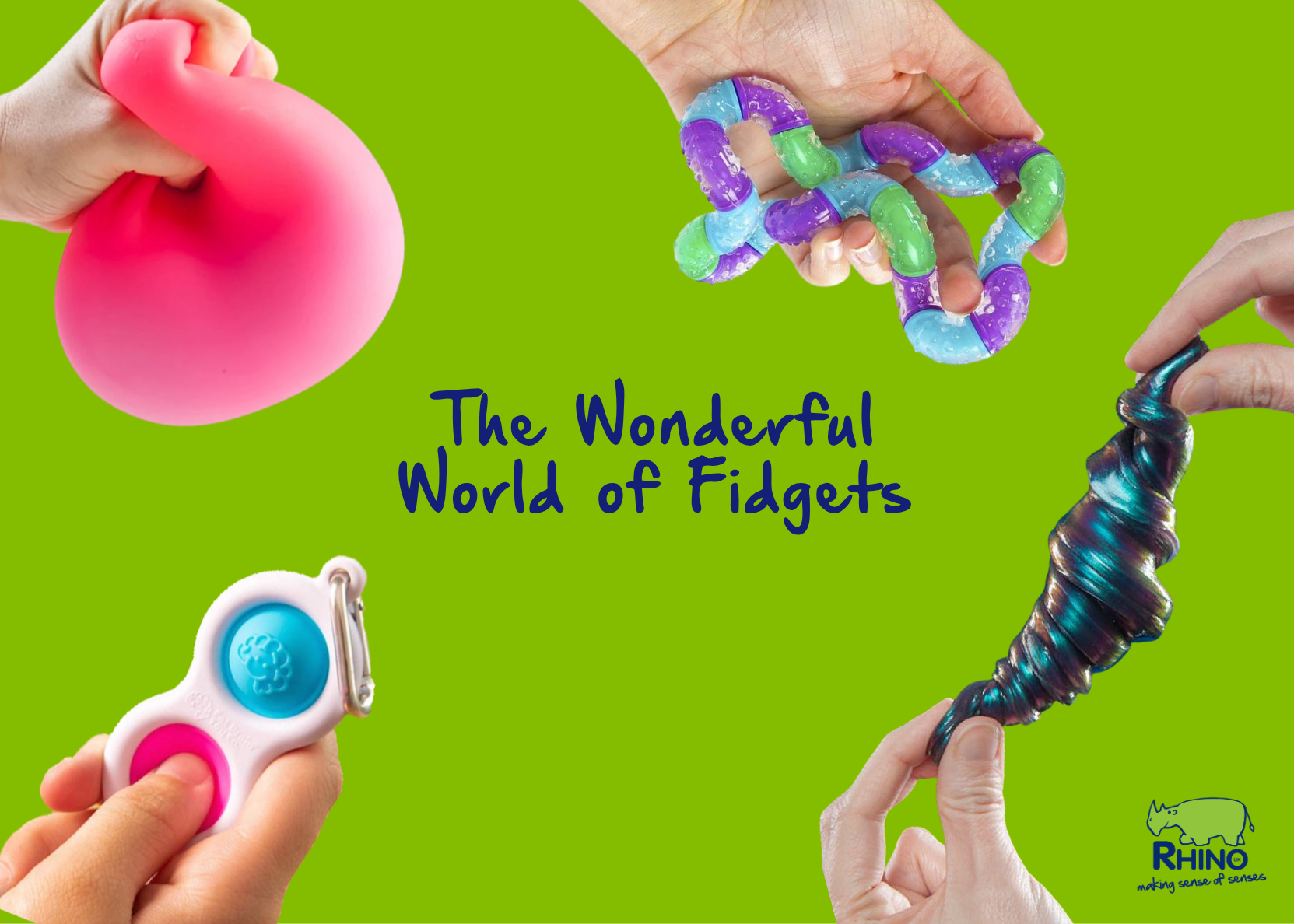
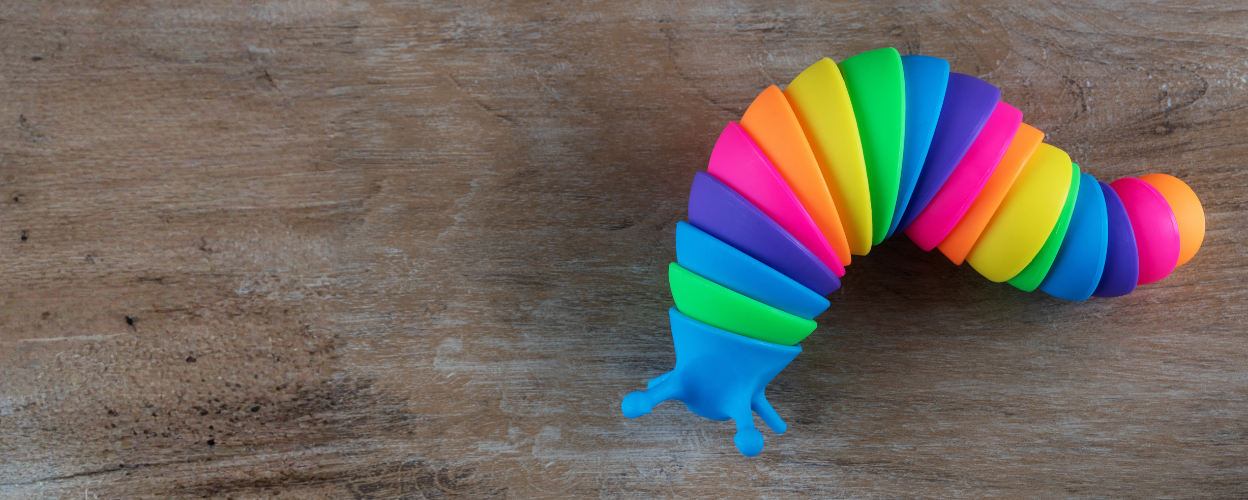
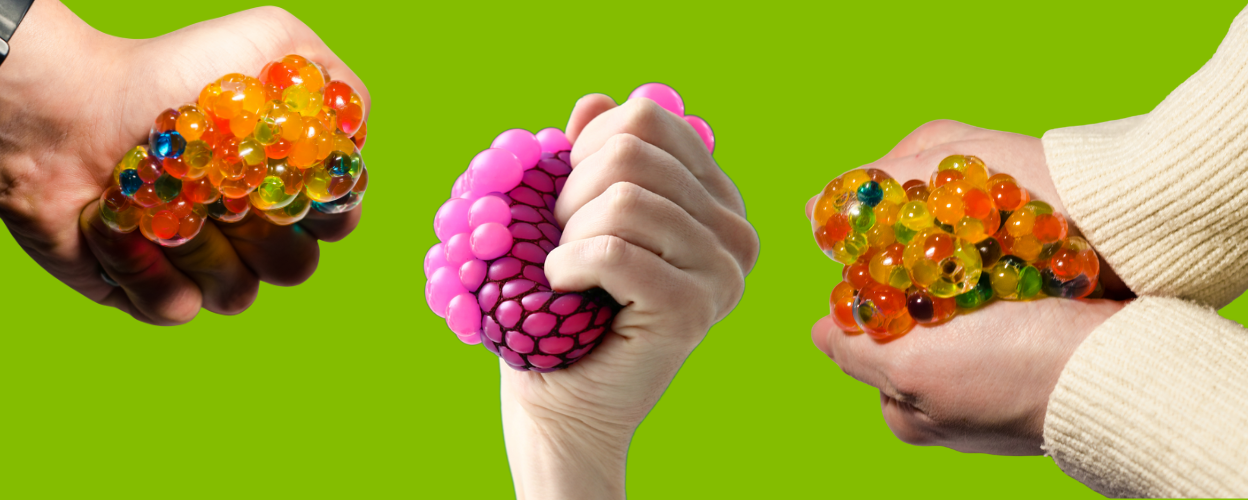
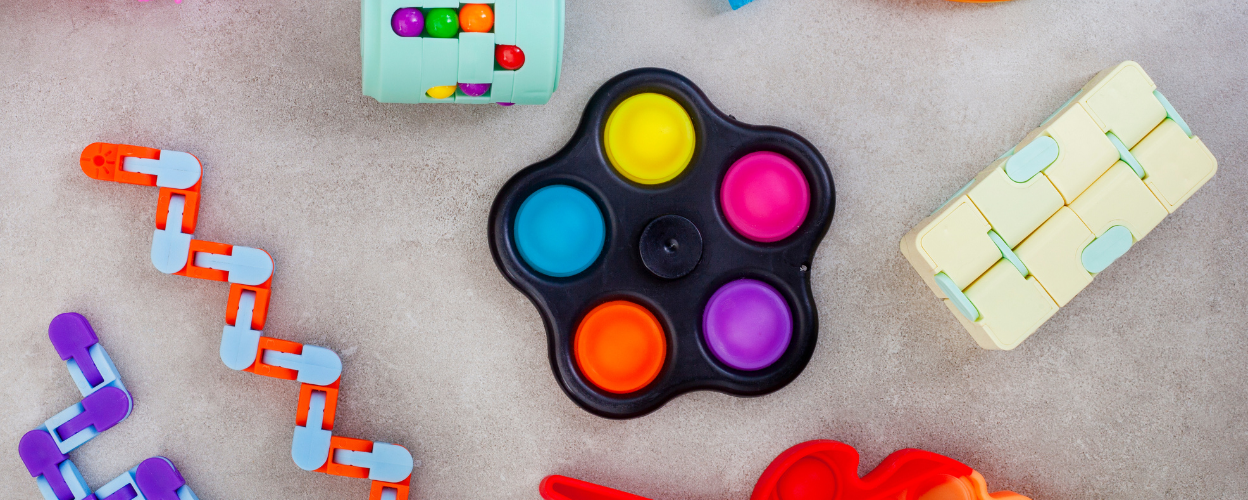
It’s World Autism Awareness Week, and to celebrate, we’re sharing our sensory experts’ Top 5 Fidget Picks!
Fidgeting or ‘stimming’ is a coping mechanism lots of people in the autistic community use to channel their twitches, anxiety and extra energy to help them feel calm and focused in a wide range of environments.
Like we’ve mentioned before in our ‘Wonderful World of Fidgets’ blog, fidgets have become a bit of a mainstream phenomenon over the past couple of years that kids (and adults) use to keep their focus. In this blog, we’re going to share our top picks for fidgets perfect for those on the autism spectrum.
Our Top Five Sensory Fidgets
1.Glow in the Dark Push Pop Fidget
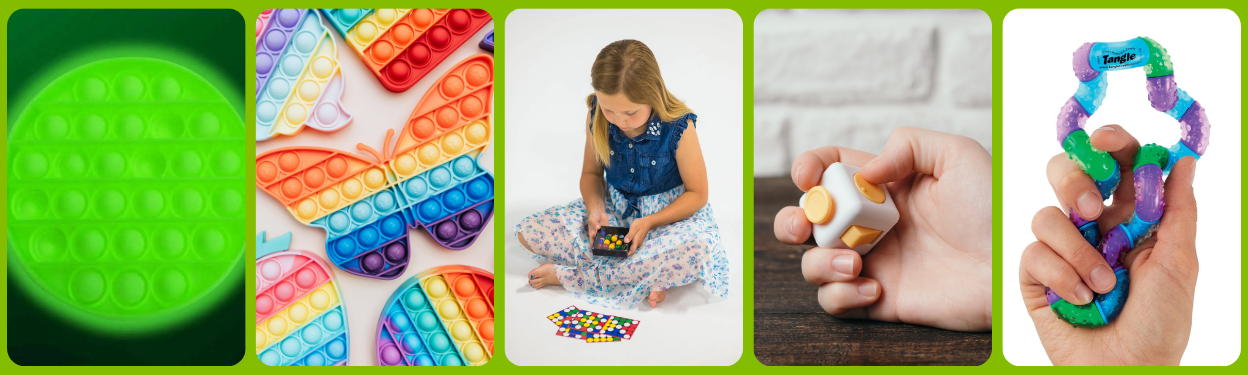
Like an endless roll of bubble wrap, our Glow in the Dark Push Pop Fidget provides terrific tactile and sound stimulation. Use your fingertips to ‘pop’ the soft silicone domes, build your fine motor skills, and listen out for the rewarding ‘popping’ sound each dome makes.
The best part is the visualstimulation: bring it into a dark room, under your duvet, or into your secret den, and watch as the fidget glows an otherworldly green.
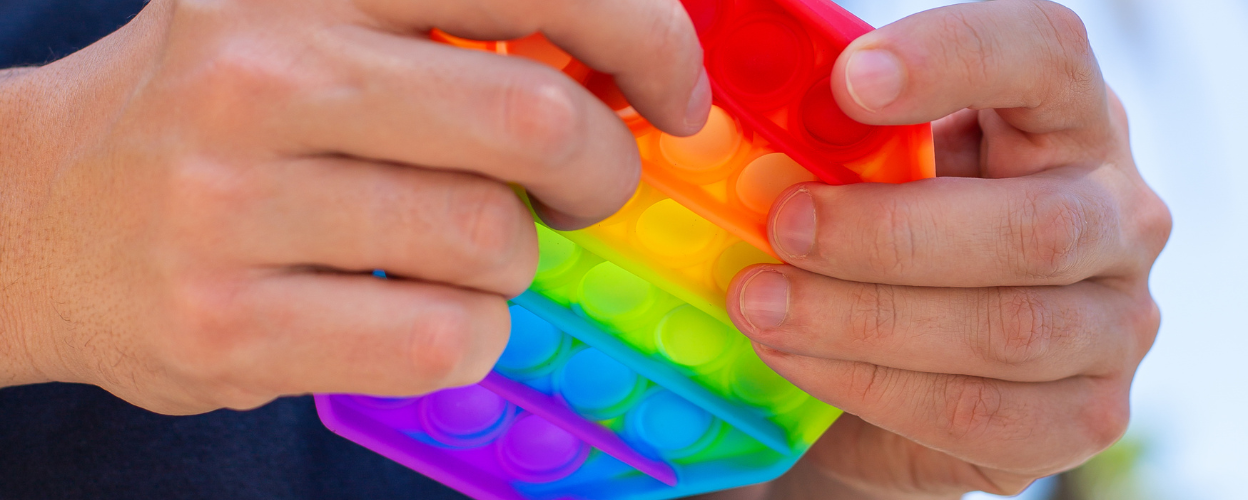
2.Rainbow Push Pop Fidget
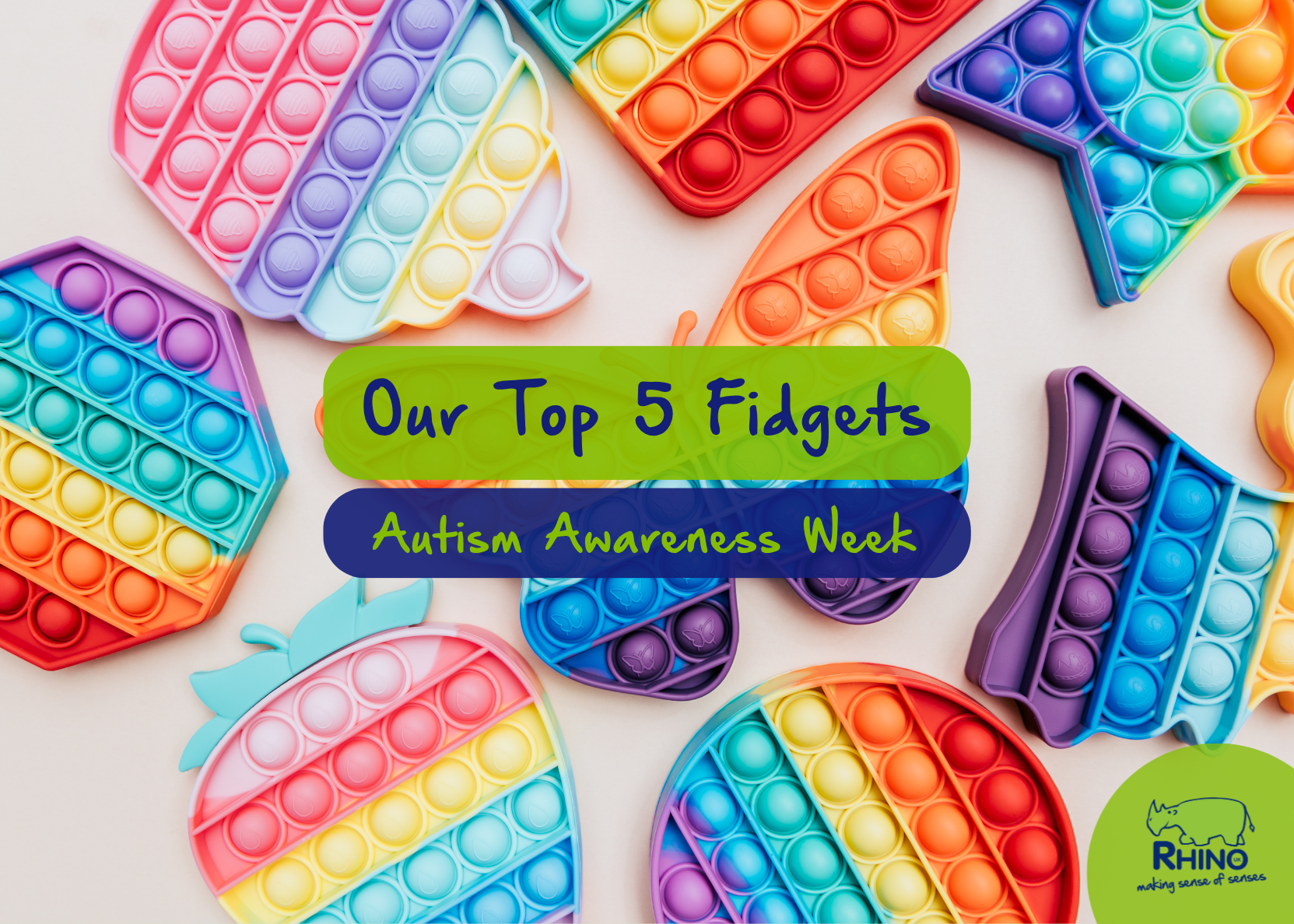
This fidget is like the above, but better suited for dreamers, escapists, and lovers of colour. It might not glow in the dark, but it sure will bring a rainbow’s inspirational magic wherever you go.
3.Tricky Fingers
For hours of fun and fine motor development, our tactiletricky fingersfidget might be just what you’re looking for.
Use the tips of your fingers to push the coloured balls into the right position to match the card’s pattern. It’s a fiddly process and takes some time to figure out which is the best way to move the balls – but once you’ve cracked it, you’ll soon be making quick time of all the sensory puzzles!
Flick, twist, press, slide and push – this fidget cube may be pocket-sized, but it’s filled to the brim with fidgeting potential. Take it wherever you go, build your fine motor skills, and enjoy the calming tactile stimulation.
Twist, turn and tangle anxious times away with our fun therapy fidget. Bright, colourful, tactile, and easy to use, Tangle Therapy is great for building fine motor skills and relieving stress.
We wish you all a wonderful World Autism Awareness week – make sure you celebrate your uniqueness loudly and proudly!
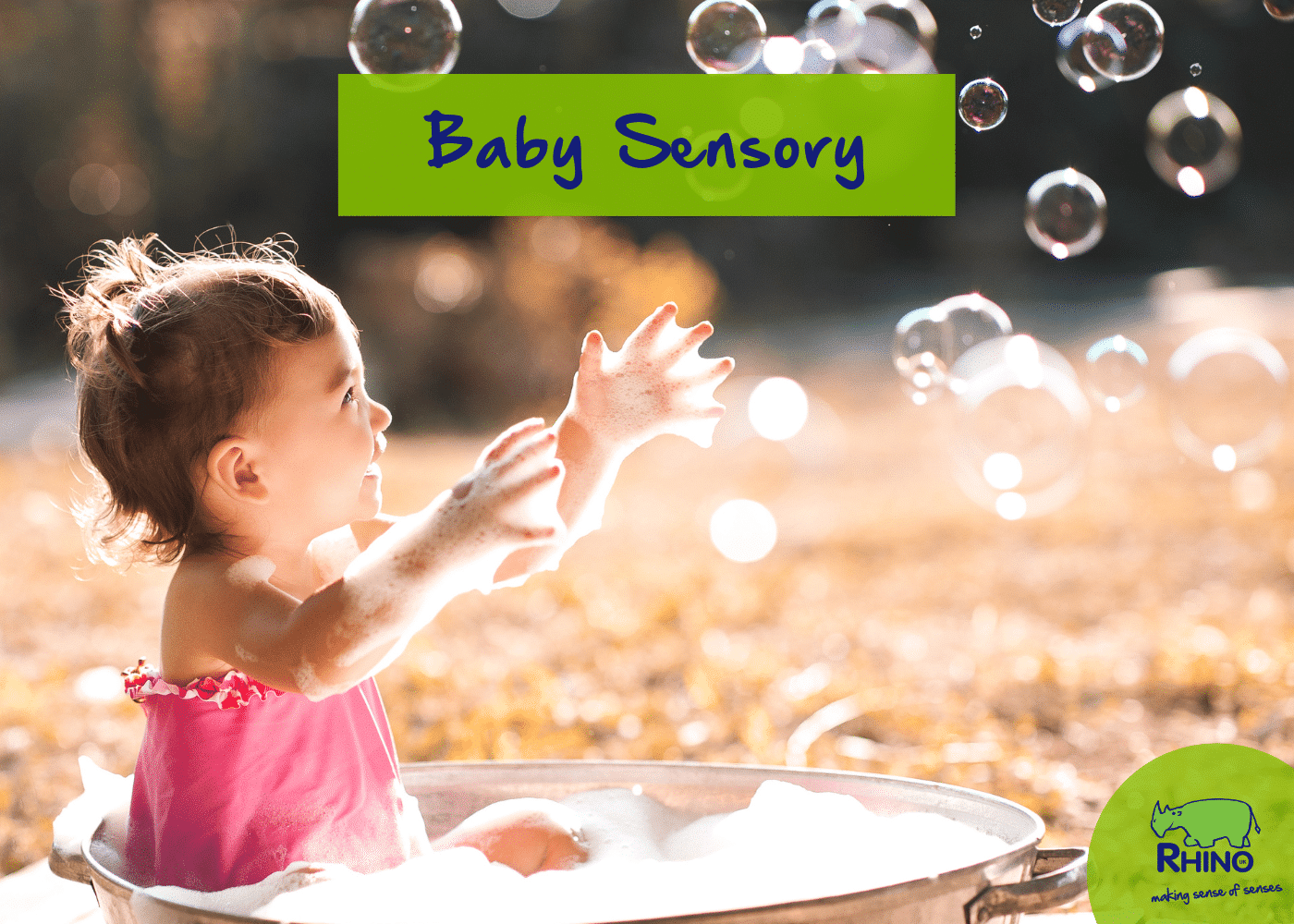
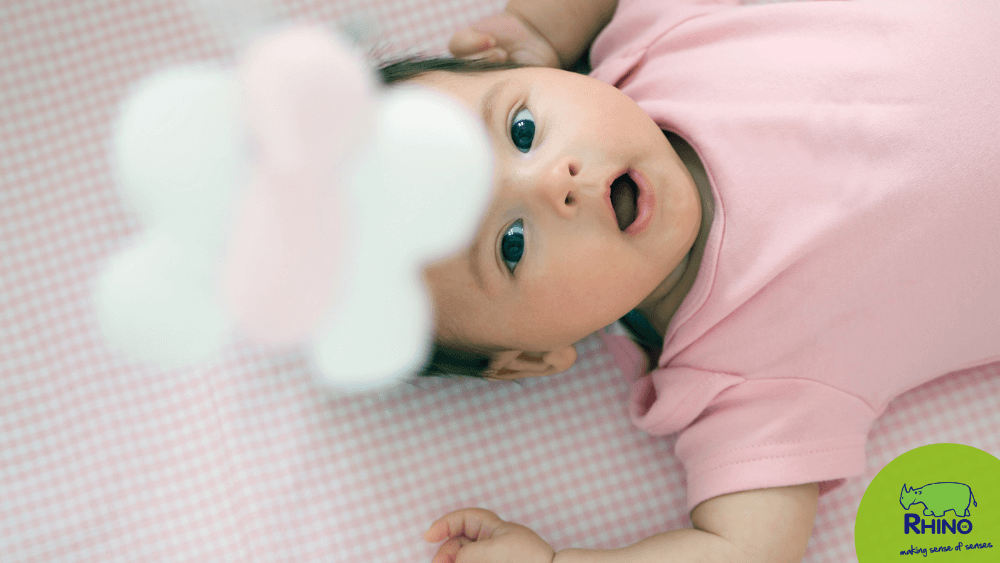
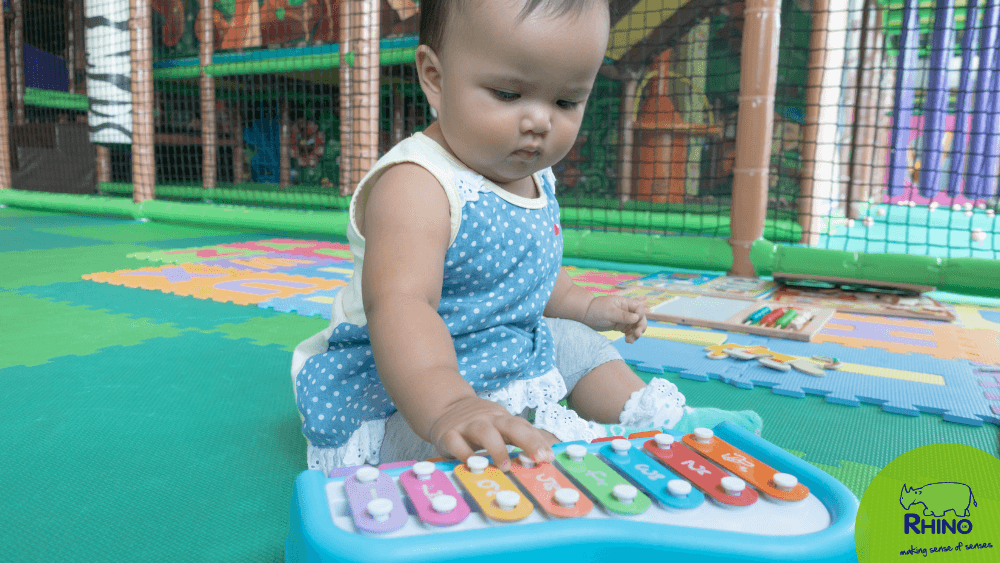
Every day babies are born into a world of stimulating sounds, colours, tastes, smells and textures – a world away from the controlled and protected environment inside mum’s tummy.
Unsurprisingly, babies can quickly feel overwhelmed by all the sensory inputs they’re suddenly exposed to, resulting in a sensory overload: a moment where your body and mind struggle to keep up with the amount of sensory inputs it’s trying to compute, leaving you feeling tired, emotional, or wanting to escape to a quieter less stimulating, comfortable space.
Did you know that sensory overloads could be a reason why a baby cries a lot during their first couple of months, as it takes time for them to adjust to their new sensory environments?
Because of this, it is a great idea for parents to try to understand their child’s sensory needs as they start their sensory journey. You’ll be able to learn more about yourself, your baby, and your relationship whilst creating a perfect sensory environment to learn, play and develop.
Discovering Sensory Preferences
It takes a couple of months for a baby to start to properly process the sensory environments they occupy. Their senses will act as a natural guide as they see, touch, smell, taste and listen to the world around them.
You might notice them starting to smile when they hear your voice or see your face, that they only fall asleep when wrapped snugly in a fluffy blanket, or that softly rocking them when they’re feeling upset can help calm them down.
You could also notice them start to get upset in a bright room, that they start crying after hearing a loud noise, or that they struggle when you try to bath them.
These are the beginnings of their sensory preferences.
Sensory preferences can show immediately, e.g. loud noise = crying, or they could take more time to show, e.g. disliking the smells of certain environments. There isn’t a rush to discover them all straight away, but becoming more aware of your baby’s sensory preferences can be a great way to regulate their mood, aid their development, and deepen the connection the two of you share.
Sensory Sensitive Children & Sensory Processing Disorder
Each child will have their own sensory preferences. But if over time you find that it takes a lot of sensory stimulation for your child to react or if it only takes the slightest stimulation to make them uncomfortable, and if it’s causing real issues with their personal and social development, then it could be worth going to see your doctor, as your child could have a sensory processing disorder.
Benefits of Sensory for Babies
Aid cognitive development: The more we understand our senses, the better we can understand the world around us. Making links between sights and smells or sounds and colour are great first steps in a child’s development.
Social Skills: Before we learn to talk, we communicate in physical ways with gestures and movement. The more we understand each other and our bodies, what we like and what we don’t like, the better we can connect to one another.
Motor Skills: Sensory activities also help us develop our hidden senses, like our Vestibular and Proprioceptive Senses – helping your baby become more confident and comfortable moving and exploring.
Connect with your child: Babies can’t tell you what’s wrong, but they can tell you when something is wrong. If they’re not hunger or time for a nappy change, their senses might be under or over-stimulated. Becoming more aware of your baby’s sensory preferences could help reduce meltdowns too.
Sensory Activities For Babies
Taste
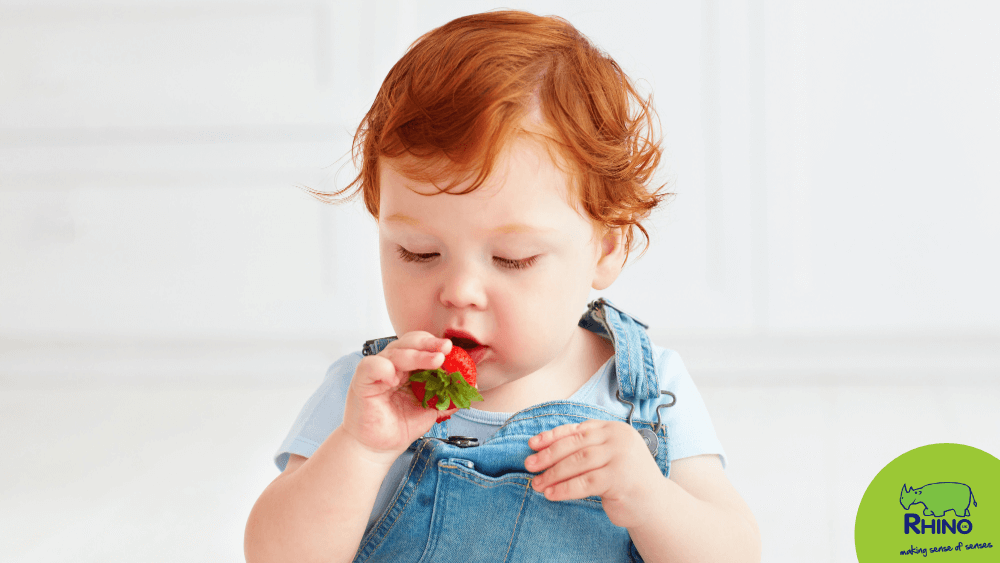
Think of your favourite meal and imagine how amazing it felt tasting it for the first time – babies have the chance to experience this each and every day as they discover new foods, fruits and vegetables. Developing a baby’s sense of taste is a great way for them to enjoy a balanced diet as they get older, as they’ll have a wide range of foods that they’re comfortable eating.
Remember that it’s not just the taste of food, but the texture too. If you find that they struggle with lumpier, more textured foods, see if they’re more responsive to smoother, pureed foods.
A Healthy Rainbow: create a rainbow of fruit and veg and get your baby to try the different tastes and textures. Do they prefer softer fruits or crunchier vegetables?
Touch is an important sense for babies. They explore the world with their hands, inquisitively grabbing for things in an attempt to learn more about them. But did you know that your child could be sensitive to certain textures?
They might prefer to wear as little clothes as possible to let their skin breathe, or they could feel the exact opposite and want to be wrapped warmly in a fluffy onesie all day.
It’s okay to be averse to some textures, but it can also be a good idea to help your baby become more comfortable with the textures they don’t like so they don’t avoid them for the rest of their life. A great way to do this is to slowly introduce them to different textures through sensory play, especially with a sensory tub!
Smell is one of a baby’s strongest senses. As their other senses develop, a baby will use their sense of smell to recognise people and places 1. Therefore, it’s a good idea for you to think about the smells in your home and consider how your baby may react to them.
Stick with a similar fabric conditioner so your baby can make a link between you and the clothes/materials around them. Use a lavender diffuser in their bedroom so they can connect its soothing smell to sleep and relaxation. Take them outside to discover the natural smells of the outdoors so they can connect their senses to nature!
Smell Sensory Activity
Smell Pots: Are perfect for inquisitive minds and noses; the plastic pots have holes in their lids, encouraging the exploration of our sense of smell. See which ones your baby likes or which ones they don’t like, introduce them to new smells and see how they react!
Sensory Toys for Babies: Smell
Smell Pots, Aroma Cubes (n.b. remember to use these products under close supervision).
Sight
We might consider sight one of our most important senses, but it’s actually one of the last senses that a baby will properly develop. Because of this, it’s a great idea to introduce your child to simple yet bold visual stimulations with bright colours, lights and reflections.
Black, white and red provide a great visual contrast and are perfect colours to stimulate a babies sense of vision. It’s one of the reasons why baby sensory products are designed in these simple colours.
Think about the brightness levels in spaces where your baby goes; try to incorporate as much natural light as possible. Let your child experiment with mirrors to learn more about reflections. We’ve found that a sensory mobile is a great visual gadget to distract and stimulate babies.
Visual Sensory Activity
Mood Light: Experiment with different colours, roll through the colours of the rainbow and find which colour your baby likes the most. The soft, colourful lighting is great for relaxing and distraction too. Our mood blocks are great for this sort of activity.
Sounds carry meaning, meanings that are learnt and experienced over time. For a baby, sounds are interesting empty sensory vehicles for them to discover and fill with their own meaning. Whether that’s the comforting tone of your voice, the sound of their name being repeated, or the soft song of a bird outside. Nurturing a baby’s sense of sound is important for their social, communicative and mental development.
Sound Sensory Activity
Baby and Me Playlist: A recent research report found that a baby will have a preference for the music that it will have heard when it was in the womb. So to comfort and nurture your child’s sense of sound, why don’t you create a playlist of special songs that you can share when you are together?
Our proprioceptive sense is a ‘hidden sense’, one that refers to our body in a space, how comfortable we feel there. The best way to describe it is the comfortable feeling you get when you’re wrapped in your duvet in bed or how calm you feel after you’ve slipped into a warm bubble bath – situations when your full body is stimulated, typically in warm comfort.
We’ll normally stimulate our proprioceptive senses without really realising it, like swaddling your baby in a soft blanket to recreates the warm comfort of being held in your arms.
Stimulating and developing your baby’s proprioceptive senses can help them feel calmer and develop their confidence.
Proprioceptive Sensory Activity
Sensory Blanket: Create a special sensory blanket for proprioceptive stimulation. This can be any normal blanket, but we’re challenging you to personalise it, whether that’s stitching patches onto it, writing the lyrics to your favourite lullaby, or creating a special name tag for the blanket. Make it special and make it memorable.
The vestibular sense is liked to our balance and movement, which can have a surprising effect on our mood and development.
You might find that your baby calms down as you slowly rock them in your arms, as the soft vestibular stimulation helps them to relax. Or you could see them light up in excitement as they bounce around in a baby bouncer. The more comfortable they feel with movement, the more confident they’ll feel in themselves.
Vestibular Sensory Activity
Swing, swing: Find a suitable swing for your baby and see how they react to the soft swinging motion. Do you need to push slower or faster? And how long will it take them to figure out how to make the seat swing on its own using their bodies?
Before you get started on your baby’s sensory journey, you should remember to always experiment cautiously and carefully. Remember that every day is an opportunity to learn more about your senses and yourself. That sensory preferences might change over time, and that it could take a while for your baby to grow into their sensory being – it’s up to you to nurture that natural process. 😊
If you’d like any more sensory advice regarding your child, then don’t hesitate to get in touch with a member of our sensory team, who’ll be more than happy to help out.
We might have been stuck inside for the best part of this year, but that hasn’t stopped us from being creative!
From painting radiant rainbows on our windows and drives to thank the NHS to developing our senses through our Sensory At Home adventures. We have managed to make 2020 a year of creative sensory discovery… and we’ve still got one more month to go!
To put your creative skills to the test, we’re launching a very special Christmas Competition.
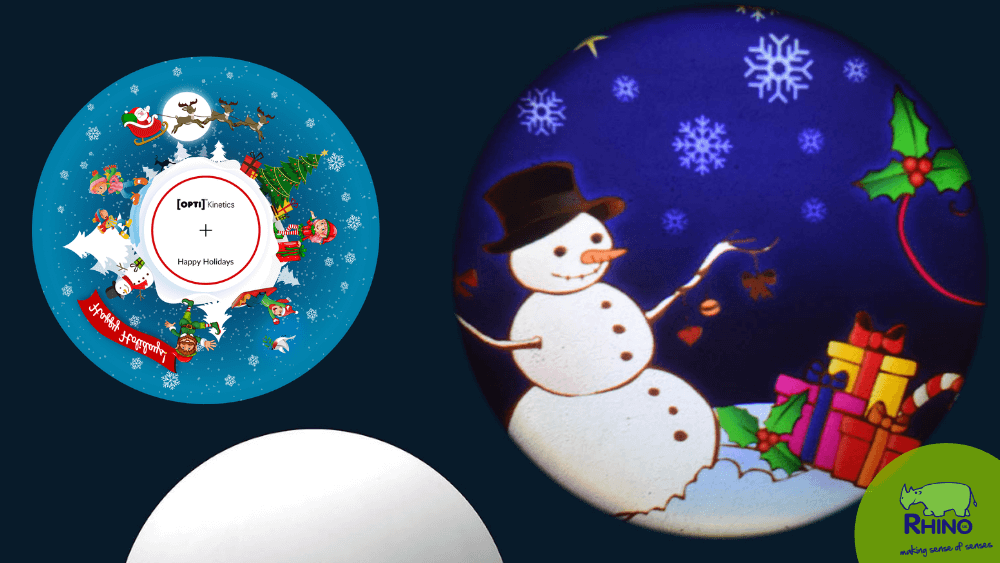
We’re challenging you to design your very own festive effect wheel, and our favourite design will be turned into a real effect wheel!
Fidgeting is a physical effect of our brain’s natural reaction to the world around us.
We might feel our feet unconsciously drumming along to the beat of our favourite song, a rush of unwelcome anxiety when navigating a new place, or spiking nerves when we are under pressure to meet a tight deadline.
Fidgety moments are a feature of our daily lives. They can happen at different times and affect us in many different ways. Some can be seen as positive (jumping up and down with excitement), whilst others are perceived more negatively (ants in your pants wriggling about on your seat).
Finding ways to channel our fidgeting has become a subject of exploration for many ingenious minds. Rooted in sensory, it’s a topic of discussion that has even recently broken into mainstream focus (see the 2017 fidget spinner frenzy!), which is why we thought it’d be a good idea to dig into the wonderful world of fidgets and why they’re an ingenious force for good.
What Are Sensory Fidgets?
Fidgets are handheld devices that relieve anxiety and stress; because of this, they’re perfect little gadgets for calming, grounding, and helping you focus.
No two fidgets are the same. From squishy stress balls to sweet-smelling glittery putty, addictive dimpl’s and tantalisingly tactile tangles, they come in a wide variety of shapes and sizes.
Although they all have one thing in common, their fidgeting brilliance!
Once you have a fidget in your hand and your fingers start to press and push upon it, you’ll soon find yourself feeling a lot calmer. This is because your brain feeds its extra energy into the fidget, helping you to focus on what’s important.
So, whether you are in a classroom, lecture, office space, plane, train or automobile, a fidget can be a handy little concentration device.
The Sensory Science Behind Fidgets
Throughout the day, our brains process a complex mix of messages and signals, from hunger levels to daydreams. This all happens in the background while we focus on the tasks we set for ourselves each day. But focusing can be hard, especially when our brain is working overtime to manage a multitude of messages at once, which can leave us feeling distracted, frustrated, and exhausted.
And this is where fidgets can help!
Fidgets give your brain snack-sized distractions so that you can focus more clearly on your main task. This is explained by children’s education specialist Sydney Zentall: “an activity that uses a sense other than that required for the primary task – such as listening to music whilst reading a textbook – can enhance the primary task performance,” citing its special importance for children with ADHD.
Research also suggests that fidgeting can increase attention and memory, highlighting the positively productive nature of distraction.
Fidgets for Different Environments:
Now that the benefits of fidgeting are clear, we thought we’d share our top fidget picks for different environments where a good fidgeting session may be necessary!
Offices
Fidgeting isn’t just for kids. People of all ages are afflicted with anxiety, stress and problems with distraction – and fidgets can be a great way to help deal with that.
One of our favourite fidgets in the office is the Jumbo Glittery Squishball; it’s pretty, sparkly, and robust enough to survive extra-stressful deadlines. I like using it in my creative incubation sessions, as the rhythmic kneading motion helps me focus on my intergalactic creative mind journey (yes, I am part alien). It’s an excellent deskmate that’s also visually appealing.
Or, if you’re more of a lateral thinker, we’d recommend a Tangle. It’s the right size for big hands and endlessly fidgety, making it a great partner for spreadsheet sessions, long meetings or commutes.
Classrooms
Classrooms can feel restrictive for many neurodivergent kids who struggle to sit still all day. Their behaviour could be easily written off as an aversion to learning, but they might actually be averse to learning formally. So, fidgets can be a huge relief for kids in formal learning environments.
Our sensory specialists have crafted a Silent Fidget Kit perfect for school environments. Each fidget in the kit has been chosen for its silent sensory and tactile values, so pupils can make the most of the fidgets without causing a disturbance. With five different fidgets inside to choose from, there is a lot of fidgety fun to have!
On The Go
It’s common to feel anxious or stressed when travelling or exploring new environments. Having a handy fidget in your pocket can help you feel grounded in the moment and stop your worrisome thoughts from flying all over the place.
Small, simple and reliable, we find that the Simpl Dimpl is a great fidget for when you’re on the go. Popping the colourful bubbles back and forth is stimulating and relaxing. But the best part is its compact size, letting you fidget from the comfort of your pocket or bag, whilst a handy clip will stop you from losing it.
Home
Sometimes there may not be a reason why you’re feeling fidgety, and there’s not a problem with that. We’d recommend our Personal Fidget Kit for these moments. It’s filled with seven of our most popular fidgets, allowing you to find the one that works best with you. Or maybe you’ll decide to match the fidget to your mood: the Rainbow Jellyball for when you’re feeling anxious, or the Tangle when you’re stressed.
We hope that you’ve enjoyed our trip through the wonderful world of fidgets. Explore our full fidget collection and find a fidgety treat for your fingers!
There’s a reason why the concept of sensory is firmly rooted in nature. Gardens, beaches, woods and parks are all wildly vivid sensory environments for us to experience and explore.
Whether that’s the ticklish feeling on the soles of your feet when walking across grass, a cool sea breeze blowing through your hair, or the shining sun warming up the skin on your arms. Nature is perhaps one of the most important parts of our sensory existence, an environment for us to connect with ourselves and our senses.
It’s also great for our health and mood. Sunlight and exercise increase our levels of serotonin, which help us feel happier and relaxed.
So, to extend the sensory excitement of the outdoors, we thought that we’d share some of our top picks for creating an outdoor sensory extravaganza!
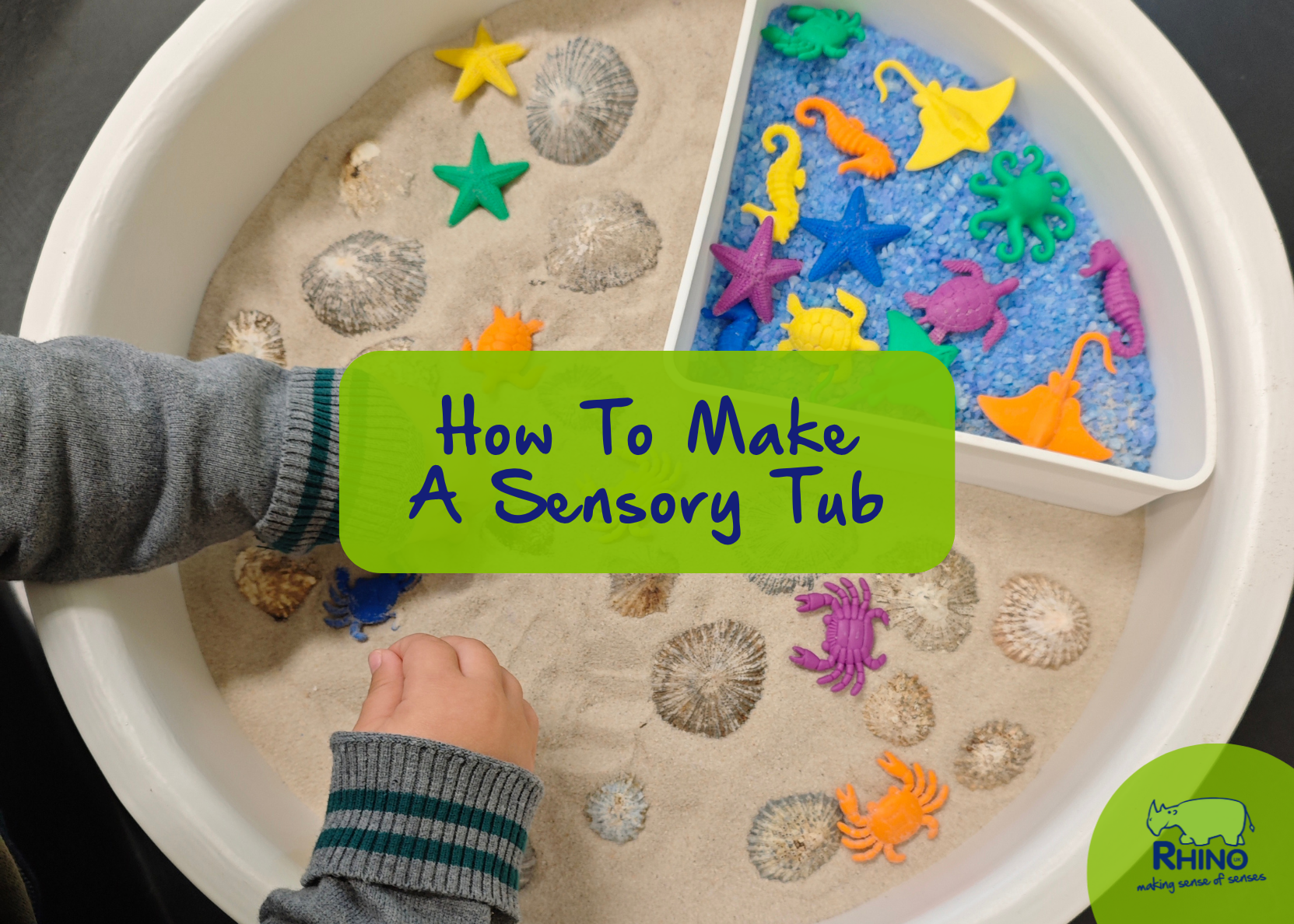
Sensory Tubs are a great DIY, hands-on tactile experience for kids and adults alike. They offer all the best parts of messy play – slime, water, goo – in a contained environment, so you don’t need to worry about cleaning up lots of mess.
One of our favourite things about Sensory Tubs is how inexpensive they are to make. In reality, all you need is a tub and an interesting tactile texture to put inside. Everything else is up to you! You have the freedom to create a hands-on sensory experience that’s tailored to perfectly meet your sensory needs.
Did you know? That hands-on tactile play is great for bringing distracted minds back into focus.
How To Make A Sensory Tub In Three Easy Steps
Step 1:Find Your Tub
Finding the perfect tub shouldn’t be hard; most containers will work perfectly. Whether it’s an old shoebox, an empty storage container, or a cooking bowl, find whatever is hanging around the house and upcycle it into a sensory treat.
Top Tip: If you’re planning to use liquids, we recommend using a waterproof tub so things don’t get too messy. To increase the visual stimulation, use a transparent container. Watch the cause and effect of your actions from a new perspective.
Choosing the right filling for your tub is an important step, as it provides the sensory base for your experience. But we’ll let you in on a secret: you really don’t need to overthink this step, as you can’t really pick the wrong filling!
Will you use dried pasta for a crunchy tactile feel?
Or colourful dyed rice that looks amazing and also feels fabulous as it falls through your fingers?
Perhaps you want to up the sensory effects by adding a splash of water and a squirt of washing-up liquid for an awesome bubble effect?
Or maybe you’re in the mood for construction and want to build something great with some colourful play sand?
Either way, it’s up to you. Raid your kitchen cupboards, craft drawers, or grab a hose pipe; we’re sure you’ll find the perfect textures for your tub!
Top Tip: For an extra sensory dimension, you could use edible ingredients to fill your tub – like cooked rice or pasta. This way, you can safely explore your sense of taste alongside the other four senses.
Top Tip – Colouring Rice: It’s easy to add a pop of colour to your rice. All you’ll need is a bag of white rice, food colouring and vinegar. Add a cup of the rice to a plastic container, then add a teaspoon of vinegar and a few drops of food colouring. Cover the container and then shake for a couple of minutes. Open up the container, and you should have some brightly coloured rice. Scoop it onto a paper towel and let it dry.
Step 3:Sensory Bits and Bobs
Now it’s time to find the best bits and bobs to add to your tub for a little extra sensory panache.
Add numbers and letters to create an educational sensory tub.
Add shells, pebbles, and sand for a sunny seaside tub.
Or you could choose some of your favourite toys and try to find them buried underneath the fiddly bits of dry pasta.
Anything that little hands can grab and explore will be perfect – remember that tactile stimulation is key!
Top Tip: Add small cups to the tub. Use them to scoop up the rice or the liquid and watch it pour out again. It’s a handy way to learn cause and effect and build key muscles.
Don’t forget to take a picture of your Sensory Tub and send it to us on social media @RhinoSensoryUK – We can’t wait to see your marvellous designs!
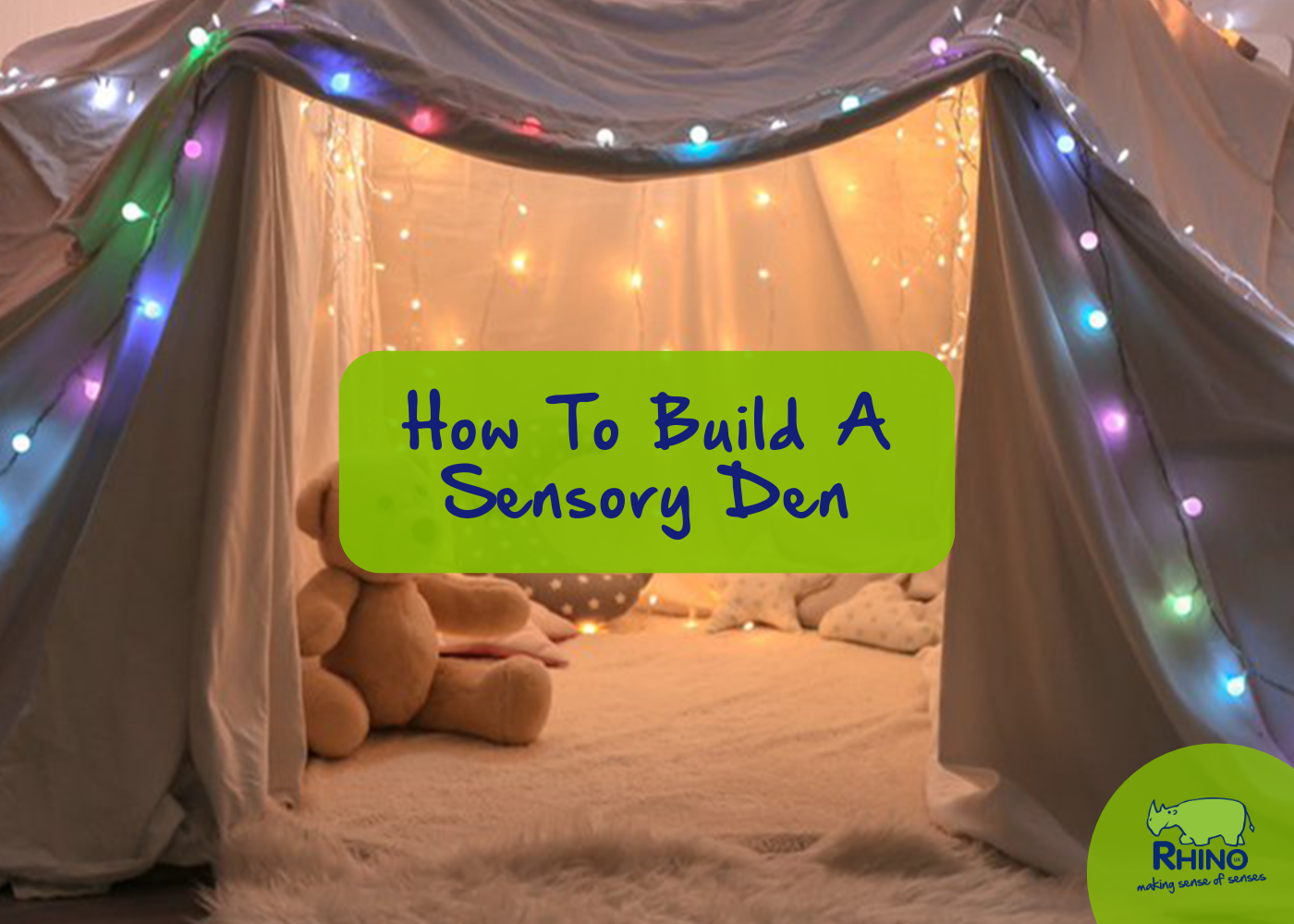
Sensory Dens are great for a personal, comforting sensory experience, especially if you don’t have the room for a permanent sensory space. They’re pretty easy to build, so we thought that we’d share a few tips on how you can build your very own Sensory Den!
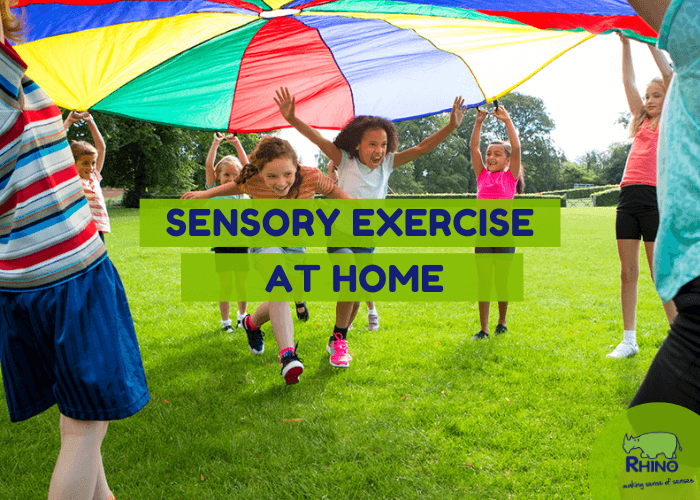
We all know that exercise is important. It can help you feel happier and more relaxed, and it also helps you become more familiar with your body and how it works! As parks and play centres are closed, it’s a great opportunity to bring some of that excitement back into your own home or garden. See below our sensory exercise inspiration and activities!
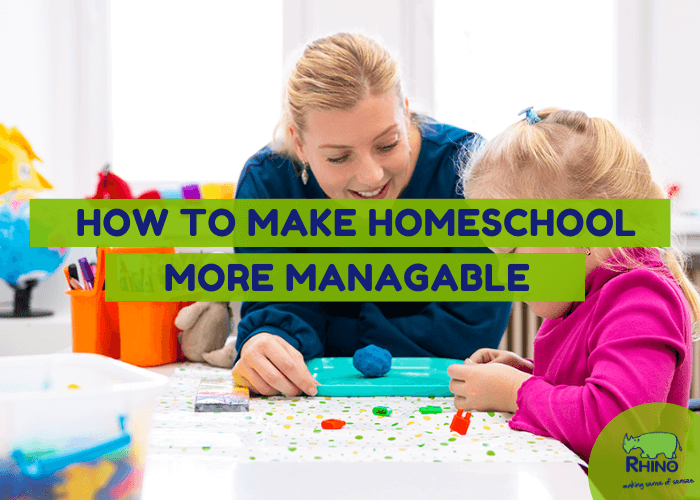
Classrooms are special environments designed to help children focus on their learning. Sadly, we don’t all have access to fabulous interactive classrooms filled with resources and friends, and this could be creating some tough emotional challenges for your child. Thankfully we’ve got some helpful tips that you can use to reduce homeschool stress, regulate your days and stabilise emotions.
Emotions are high. Routines are out of the window. And we might not know where to focus our energy. It’s difficult, to say the least.
But we want to let you know that the grey cloud of uncertainty will pass. Bright sunny skies are ahead. And whilst we wait for the sun to shine, we’re ready to bring you aradiantrainbowofSensory Supplies.