Sensory Tubs are a great DIY, hands-on tactile experience for kids and adults alike. They offer all the best parts of messy play – slime, water, goo – in a contained environment, so you don’t need to worry about cleaning up lots of mess.
One of our favourite things about Sensory Tubs is how inexpensive they are to make. In reality, all you need is a tub and an interesting tactile texture to put inside. Everything else is up to you! You have the freedom to create a hands-on sensory experience that’s tailored to perfectly meet your sensory needs.
Did you know? That hands-on tactile play is great for bringing distracted minds back into focus.
How To Make A Sensory Tub In Three Easy Steps
Step 1: Find Your Tub
Finding the perfect tub shouldn’t be hard; most containers will work perfectly. Whether it’s an old shoebox, an empty storage container, or a cooking bowl, find whatever is hanging around the house and upcycle it into a sensory treat.
Top Tip: If you’re planning to use liquids, we recommend using a waterproof tub so things don’t get too messy. To increase the visual stimulation, use a transparent container. Watch the cause and effect of your actions from a new perspective.
Want a sturdier tub you can use for social sensory sessions? Our Sensory Discovery Table and Sensory Water Tables double as excellent sensory tubs!
Step 2: Add the filling
Choosing the right filling for your tub is an important step, as it provides the sensory base for your experience. But we’ll let you in on a secret: you really don’t need to overthink this step, as you can’t really pick the wrong filling!
- Will you use dried pasta for a crunchy tactile feel?
- Or colourful dyed rice that looks amazing and also feels fabulous as it falls through your fingers?
- Perhaps you want to up the sensory effects by adding a splash of water and a squirt of washing-up liquid for an awesome bubble effect?
- Or maybe you’re in the mood for construction and want to build something great with some colourful play sand?
Either way, it’s up to you. Raid your kitchen cupboards, craft drawers, or grab a hose pipe; we’re sure you’ll find the perfect textures for your tub!
Top Tip: For an extra sensory dimension, you could use edible ingredients to fill your tub – like cooked rice or pasta. This way, you can safely explore your sense of taste alongside the other four senses.
Top Tip – Colouring Rice: It’s easy to add a pop of colour to your rice. All you’ll need is a bag of white rice, food colouring and vinegar. Add a cup of the rice to a plastic container, then add a teaspoon of vinegar and a few drops of food colouring. Cover the container and then shake for a couple of minutes. Open up the container, and you should have some brightly coloured rice. Scoop it onto a paper towel and let it dry.
Step 3: Sensory Bits and Bobs
Now it’s time to find the best bits and bobs to add to your tub for a little extra sensory panache.
- Add numbers and letters to create an educational sensory tub.
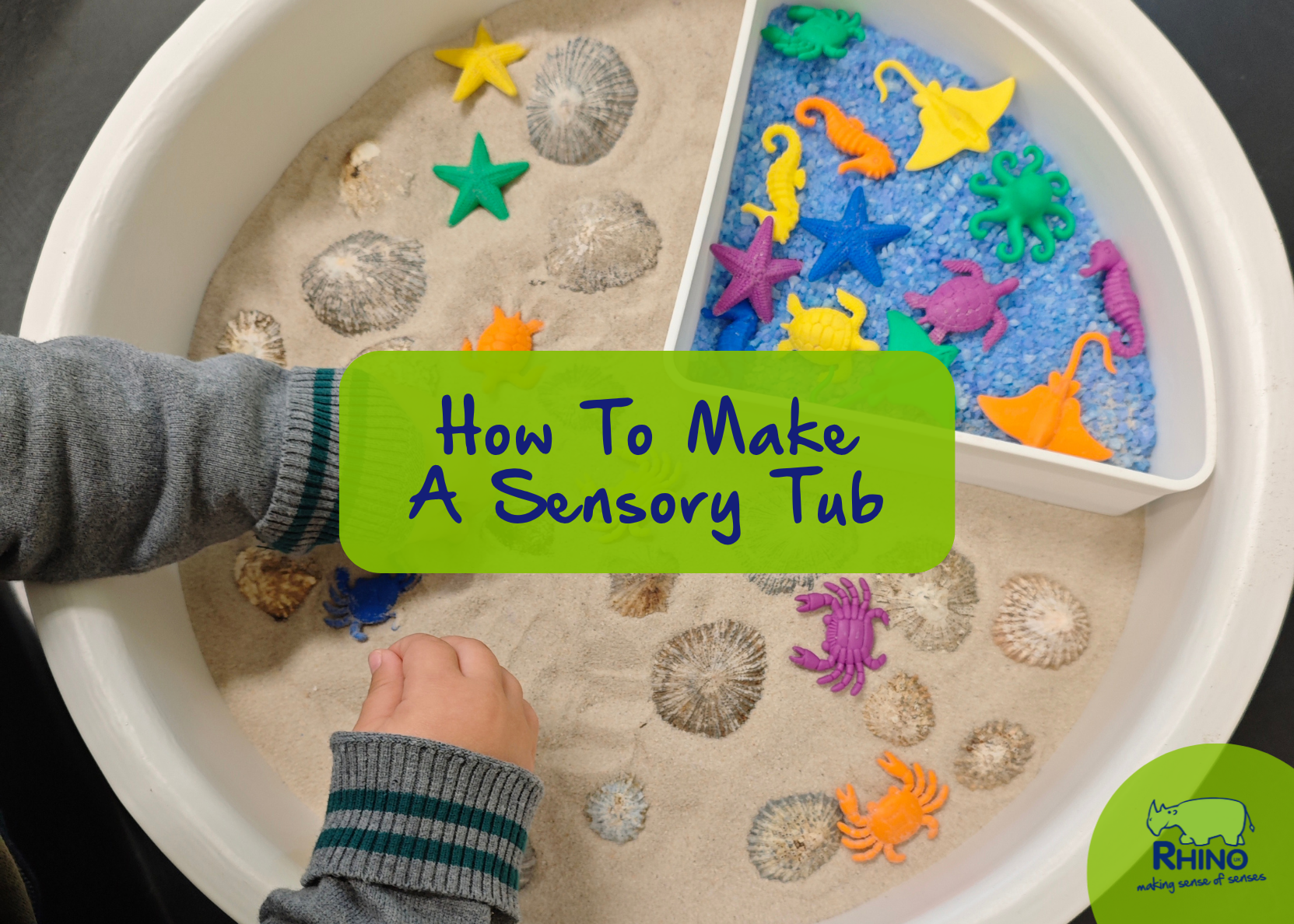
- Add shells, pebbles, and sand for a sunny seaside tub.
- Or you could choose some of your favourite toys and try to find them buried underneath the fiddly bits of dry pasta.
- Anything that little hands can grab and explore will be perfect – remember that tactile stimulation is key!
Top Tip: Add small cups to the tub. Use them to scoop up the rice or the liquid and watch it pour out again. It’s a handy way to learn cause and effect and build key muscles.
Don’t forget to take a picture of your Sensory Tub and send it to us on social media @RhinoSensoryUK – We can’t wait to see your marvellous designs!