


What is a Sensory Space?
A sensory space is an area specially designed to support, nurture, and calm senses.
Sensory spaces use therapeutic resources, like calming lights, sounds, and textures, to create an environment that’s controlled, calming, and inclusive of senses.
Because of this, sensory areas are particularly useful for people who might struggle in traditional, overstimulating environments, including autistic individuals and people with sensory processing disorders.
How does a Sensory Space differ from a Sensory Room?
At their core, Sensory Spaces and Sensory Rooms are both physical locations designed to support senses.
Sensory Rooms are traditional therapeutic areas, fitted with resources designed to help individuals regulate their own behaviour. They are usually used alongside a specialist Occupational Therapist, Play Specialist, or SEND Leader, for one-to-one therapy sessions, learning, play and discovery.
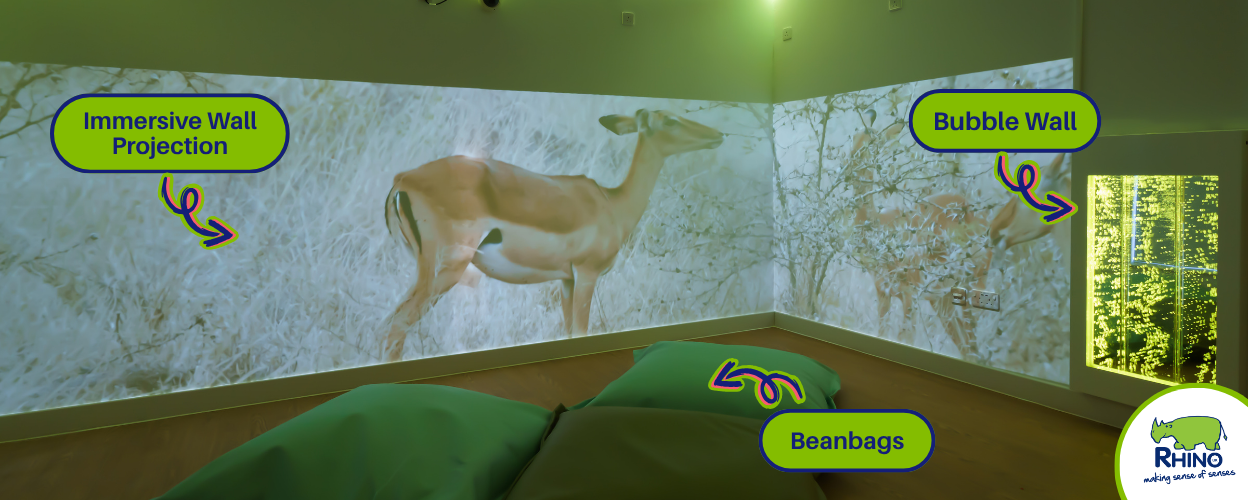
Sensory Rooms come in all shapes and sizes; popular room types include Multi-Sensory Rooms and Sensory Integration Rooms. These spaces usually include a Bubble Tube, Soft Safety Padding, and colourfully calming LED Mood Lighting alongside other tactile, visual and auditory resources.
Sensory Spaces, on the other hand, aren’t constrained by four walls or strict conventions; they are less formal and offer the opportunity for holistic-led designs. A Sensory Space might be an area in a public setting, e.g. a hospital or a school, that’s been intuitively designed to be more inclusive of individuals with extra-sensory needs. Using lighting, seating, and tactile resources to create a calming environment.
They’re particularly effective in naturally overstimulating public spaces, e.g., a busy airport, as Sensory Spaces become a kind of sensory sanctuary where anyone who’s feeling overstimulated can retreat to take a break and re-regulate.
Sensory Rooms are therapeutic environments designed by practitioners for learning, development and play. Whilst Sensory Spaces provide a calming ‘third space’ away from overstimulating environments, and can be used by anyone who might want a place to relax.
Types of Sensory Spaces
Indoor Spaces
Any indoor space can be sensory-friendly if you approach your design with accessibility, inclusivity, and neurodiversity in mind.
Because there isn’t one particular type of sensory space, you have the freedom to create an area that perfectly suits your needs. You could have a dedicated room, or incorporate sensory elements into general areas, e.g., a waiting room, classroom, corridor, or airport lounge.
Outdoor Sensory Spaces & Gardens
Any natural outdoor setting already has the foundations to become a calming sensory space. With natural light, a gentle breeze, and a collection of herbs and flowers, you can create an outdoor area that’s a therapeutic break for people with sensory needs to relax, unwind, and regulate their senses.
Low Stimulation or Low Arousal Spaces
Consider creating a quiet environment that provides a calming space for individuals to decompress. They should have minimised or controlled sensory inputs (e.g., sounds, brightness levels, and smells) for a relatively ‘neutral’ sensory atmosphere.
Low stimulation sensory spaces should be located away from busy or noisy areas, with limits and controls on sensory inputs. Their controlled nature makes them particularly useful for individuals who are likely to experience sensory overload.
Portable/Temporary Sensory Options
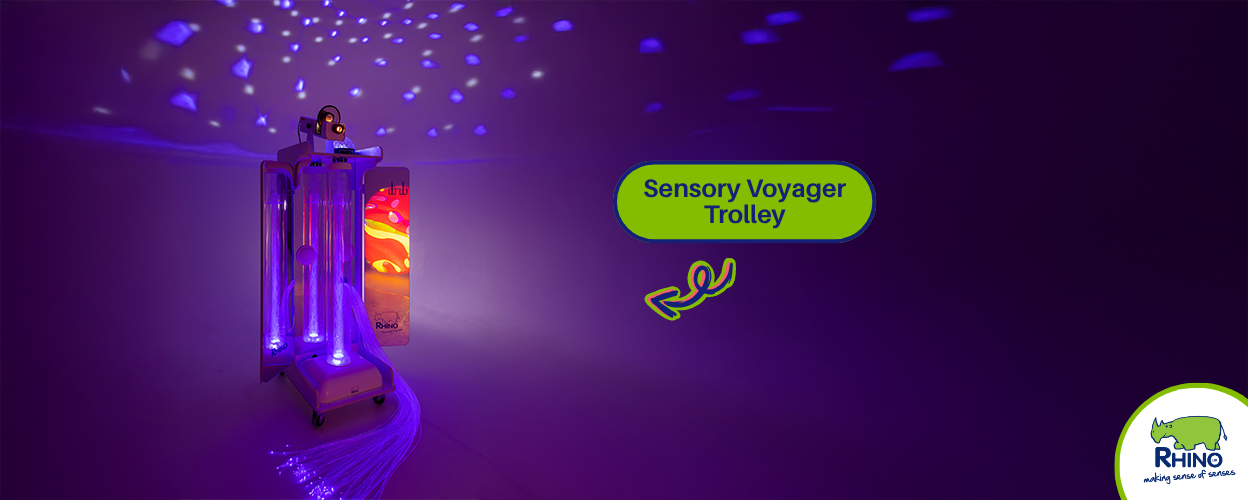
Portable resources are ideal for those who might not have the space, time, or budget to create a dedicated sensory space. Portable sensory resources are a great way to practically create a calming sensory experience. Whether that’s with a pop-up sensory den, a sensory voyager trolley, or an MK1 immersive projector.
Who are Sensory Spaces for?
Sensory spaces are suitable for children, adults, and anyone who might benefit from a calming, quiet, and inclusive environment.
Although they are typically designed for people with additional needs, anyone who needs a break from overstimulating environments can benefit from the therapeutic effects of a sensory area.
Because of their universal appeal, sensory spaces suit a wide range of environments, including schools, hospitals, and care settings. Some businesses are also creating sensory spaces to make their work environments more inclusive for their staff.
How to make a Sensory Space
Creating a sensory space doesn’t need to be a huge project. With a bit of planning and motivation, you can create a space that effectively meets your needs.
To get you started, here are five tips to help you begin your sensory space project.
-
Choose your space
Start by deciding on which area would be the best for your sensory space. Whether that’s a plan to make a classroom or waiting room more sensory-friendly, or to create a new dedicated low-stimulation zone.
Your space should be quiet, calm, and away from busy or loud areas.
It’s also important to consider the size of your sensory space. Whether it’s somewhere large and open, that can be used by multiple people at the same time. Or somewhere smaller and more boutique, for personal calming sessions.
-
Lighting
Lighting is an important part of any sensory area. You don’t want your space to be too bright or too dark, and you’ll definitely want to avoid any harsh overhead lighting.
Consider using smaller lamps or colourful LED mood lighting to create a calming ambience that lowers stress levels.
-
Seating & Soft Furnishings
The general rule is the comfier the better. Squishy sofas, colourful beanbags, blankets, and cushions will help you create a space people want to spend time in, helping them feel comforted, safe, and calm.
But we also understand that practicality is an important factor too. Certain types of soft furnishings may not be suitable for some environments, e.g. areas where infection control is important.
But there’s no need to worry! We have a special collection of soft furnishings designed for these environments, and if you’d like more information, get in touch with a member of our friendly sensory team.
-
Sound
You don’t want your sensory space to be loud or noisy. It’s best to reduce noise so individuals can relax in the space and avoid becoming overstimulated.
Consider adding noise-reducing resources such as our Acoustic Clouds, which help reduce noise and echoes, creating a sensory-friendly sound environment (and also help you create an aesthetic/themed sensory environment).
And if you don’t have the budget for larger sensory sound resources, having a few pairs of noise-cancelling headphones on hand is great for giving individuals the option to reduce their sound experience if they’re particularly sensitive.
-
Sensory Resources
To tie the physical space together, it’s a great idea to have a collection of interactive sensory resources that individuals can use when they’re in the space.
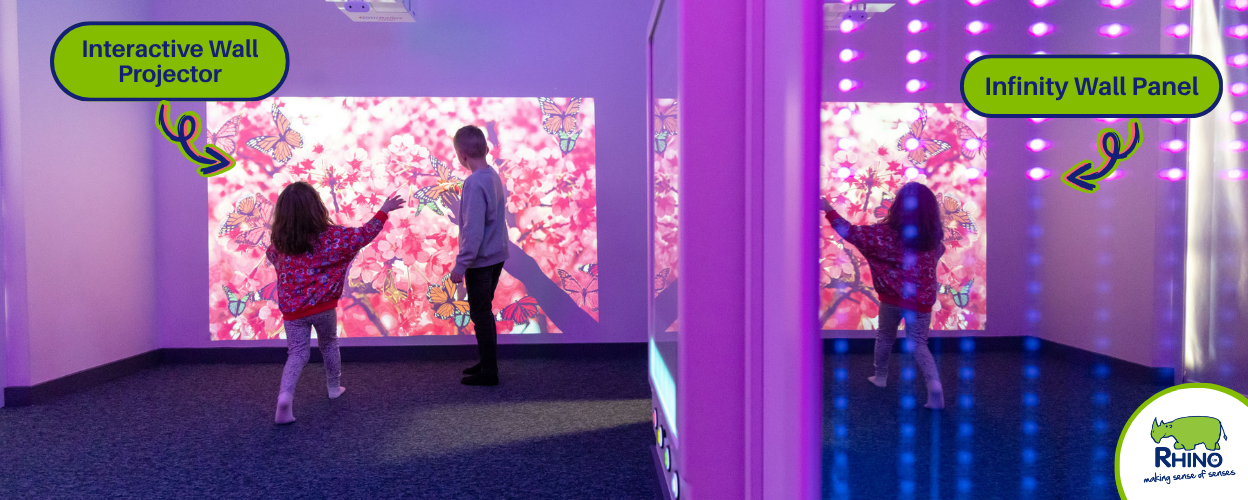
You could start small with a tactile fidget kit that’s great for stress-busting, or consider a larger, more robust fixture, like an interactive wall panel, that immediately distracts and calms.
Whether it’s big or small, expensive or inexpensive, having something that users can engage with, both tactically and mentally, is a great way of calming and helping individuals self-regulate their emotions.
If you’re looking for inspiration, you can check out our sensory shop, or get in touch with our team for more tailored advice.
Creating an Outdoor Sensory Spaces
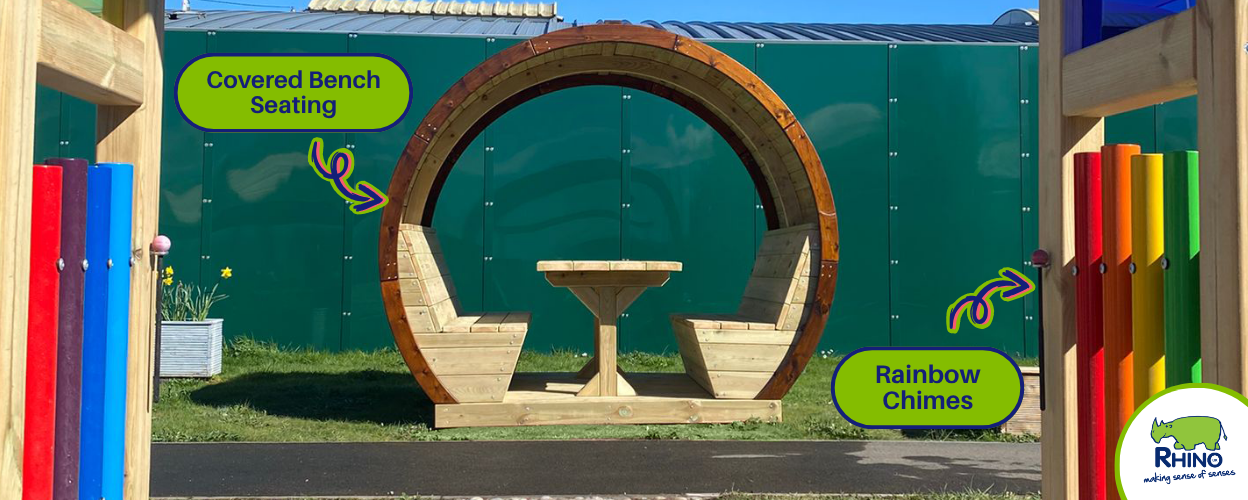
The same time, thought, and care you’d need for an indoor sensory space is exactly what you’ll need for an outdoor space. We aren’t all landscape gardeners, with unlimited space and budgets, so it’s important to think practically. And remember that sometimes the smallest changes/resources can make the biggest impact.
- Seating: Start with somewhere to sit. That could be a calming bench, a swing, or a colourful blanket for a cosy spot to sit down.
- Space: Big or small, decide how much of your garden area you’re happy to turn into a dedicated sensory space.
- Plants/Herbs/Flowers: Make the most of nature’s sensory resources. Plant colourful flowers for a visual distraction or cultivate a patch of herbs and veggies for unique smells and interesting textures.
Looking for inspiration? Check out our blog on Alan Titchmarsh’s Love Your Garden sensory episode.
Rhino Sensory Space Design Service
If you’ve already got a plan, or if you really don’t know where to start, we’re here to help.
Our sensory team are always on hand to help you bring your ideas to life. We have over 20 years of experience designing and installing sensory spaces across the UK. And we’re always looking forward to our next sensory project!